Our Focus
Decoding the lifelong dialogue between virus and neuron
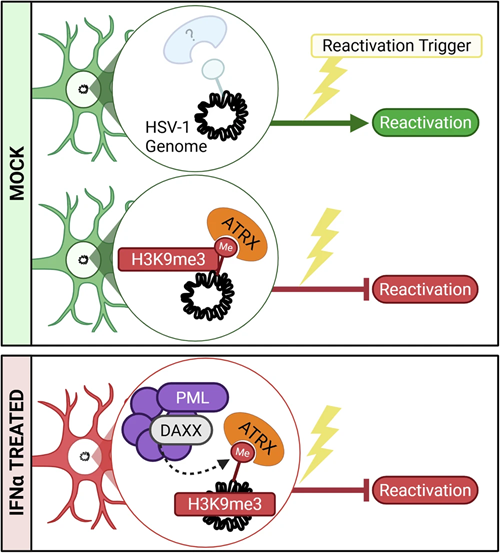
Herpes simplex virus infects most of the world's population and persists for life by establishing a silent, latent infection in neurons. We study the chromatin, signaling, and immune mechanisms that keep the virus dormant — and what tips the balance toward reactivation, recurrent disease, and neurological consequences.
From the Bench
Latest Publications
Pulled live from Europe PMC and updated automatically as new work is indexed.
Publications couldn't load right now. View them on PubMed →
What's Happening
Lab News
Awards, new papers, and life in the lab.
No news posted yet — check back soon.
{{ n.dateLabel }}
{{ n.title }}
{{ n.excerpt }}
Get Involved
Join us at the University of Virginia
We welcome curious graduate students, rotation students, and postdocs excited about virology, chromatin, and neuroscience. Explore our department and how to apply.
Department
UVA MIC
Microbiology, Immunology & Cancer Biology — the largest basic science department at UVA and our academic home.
Visit departmentGraduate Admissions
Apply via BIMS
The Biomedical Sciences (BIMS) umbrella PhD program is the gateway to rotating in our lab. Applications open ~Sept 1, due ~Dec 1.
Start your applicationPhD Track
Microbiology Program
Learn about the Microbiology PhD track within BIMS, coursework, and the research training that shapes our students.
Explore the track